
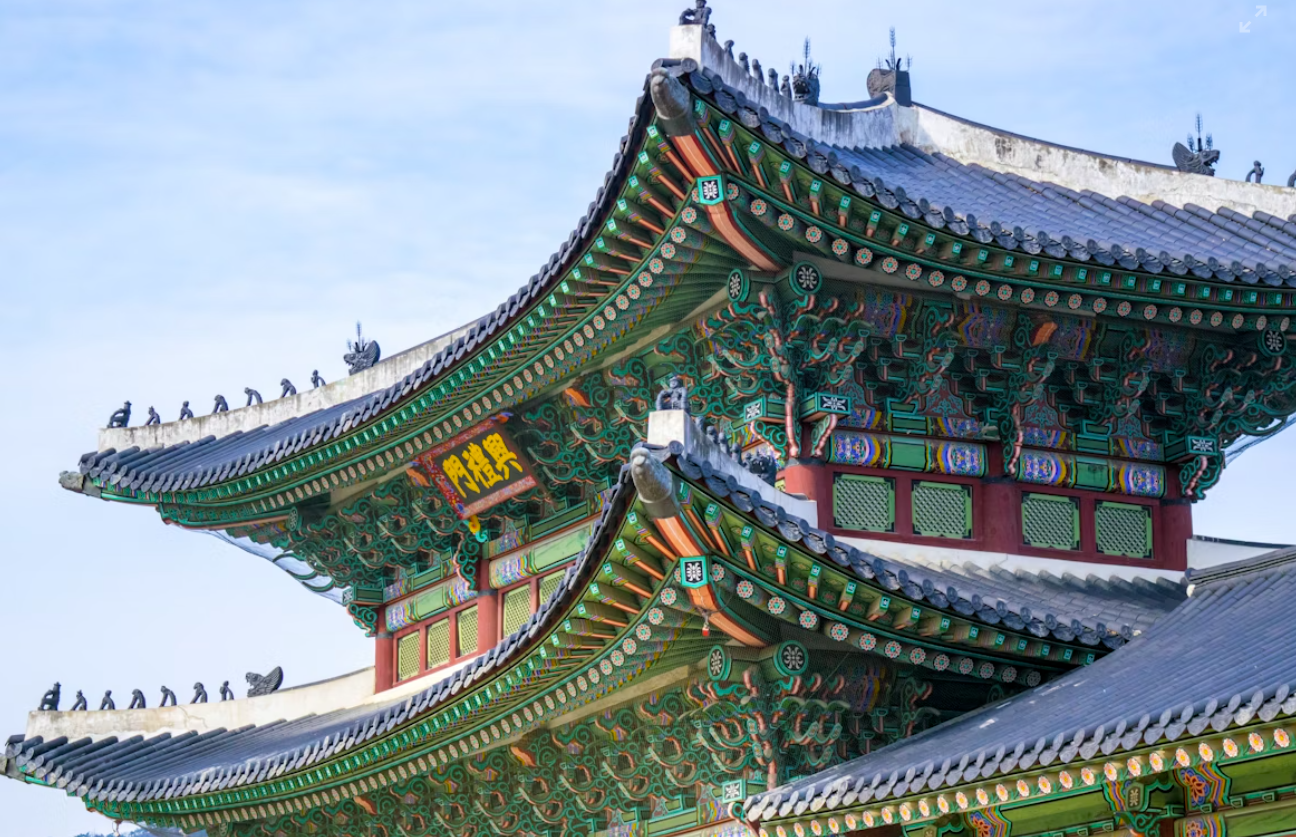
Where Ancient Palaces Meet Neon Nights
Exploring South Korea
A first-timer's guide to South Korea — from the grand palaces of Seoul to Michelin-starred meals, world-class shopping, and the small discoveries that make every journey unforgettable.
South Korea had been on my list for years. I knew about the food, the K-beauty, the palaces. What I didn't expect was just how deeply the country would get under my skin — or how quickly I'd start planning a return. This is the guide I wish I'd had before I went: honest, personal, and with enough insider knowledge to help you travel smarter, eat better, and discover the Seoul that most first-timers miss.
"Seoul is a city of beautiful contradictions — ancient gates standing in the shadow of glass towers, street food stalls beside Michelin-starred restaurants, centuries of history woven into the most modern city on earth."
Getting There
& Getting Around
Incheon International Airport is consistently rated among the best in the world, and your first impression of South Korea begins here. For getting into Seoul, public transport is not just adequate — it's exceptional. The AREX (Airport Railroad Express) whisks you directly to Seoul Station in around 43 minutes, and the subway system from there is so well-organised and clearly signposted in English that even the most directionally challenged traveller will feel confident within a day.
That said, if you're planning to venture beyond Seoul — to Gyeongju, Busan, or the countryside — hiring a private tour guide with a driver is one of the best investments you can make. The ability to stop when something catches your eye, to ask questions freely, and to access places that would be impractical by public transport transforms a good trip into a great one. Your travel advisor can arrange this seamlessly before you depart.
Richmond Suite Tip
Pick up a T-money card at the airport — it works on every subway, bus, and even taxis across the country. Tap in, tap out. No fumbling for change, no language barrier. It's the single most useful piece of plastic you'll carry in Korea.
Essential Apps
to Download
Before you land, download these. Google Maps is largely unreliable in South Korea — a quirk of Korean data regulations — so the right apps are genuinely essential rather than merely convenient.
Naver Map
Your most important download. Korea's answer to Google Maps — accurate, English-friendly, with real-time transport, walking routes, restaurant hours, and subway exit details. Use this for everything.
Papago (by Naver)
The best translation app for Korean — far more nuanced than Google Translate. Point your camera at a menu and get an instant translation. A genuine lifesaver at smaller, local restaurants.
K.ride
The tourist-friendly version of Kakao Taxi, built specifically for international visitors. Accepts overseas credit cards and offers translation in over 100 languages. Uber also works well in Seoul if you already have an account.
Subway Korea
Real-time subway maps, route planning, and arrival times across all Korean cities. Seoul's subway network is vast and wonderful — this app makes it completely navigable.
Klook
For booking tours, skip-the-queue tickets, and experiences on the go — including the Discover Seoul Pass, which offers free or discounted entry to dozens of attractions.
The Palaces — More Than History
Seoul's royal palaces are not merely tourist checkboxes — they are the soul of the city. I visited several, and each left a distinctly different impression.
Gyeongbokgung, the grandest of them all, dates to 1395 and sits against the dramatic backdrop of Bugaksan mountain. Arrive early — the morning light across the main courtyard is extraordinary, and the Changing of the Royal Guard ceremony at the main gate is one of those rare spectacles that justifies the early alarm. The palace grounds are vast and peaceful once the mid-morning crowds arrive, so give yourself at least two hours.
Changdeokgung is, in my opinion, the most beautiful. A UNESCO World Heritage Site, it is the only Korean palace that retained its original landscape — and the Secret Garden (Huwon) at the rear is an absolute highlight. Pavilions set among 300-year-old trees, lotus ponds, and the kind of stillness that makes you forget you're in one of Asia's great capitals. Access to the Secret Garden requires a separate timed ticket; book ahead.
A note on hanbok
Renting a traditional hanbok (Korean ceremonial dress) grants free entry to all five royal palaces. More than just a practical tip, it's a genuine experience — and one the Koreans around you will warmly appreciate. Rental shops cluster around every palace entrance.
Where to
Eat & Drink
Seoul's food scene is one of the great surprises of the city — and I say that as someone who arrived with high expectations. From street-food pojangmacha tents to Michelin-starred dining rooms, the quality and creativity on offer is genuinely world-class.
Michelin Bib Gourmand
Anmok Seongsu
A standout meal in the buzzing Seongsu neighbourhood. Michelin-recognised for exceptional quality at accessible prices — the kind of discovery that makes you feel like a local. Book ahead; this one fills up fast.
Bar of the Trip
Ace Four Club
Extraordinary fried chicken and some of the most inventive cocktails I've encountered anywhere. The combination sounds unexpected; in practice, it is absolutely perfect. A brilliant way to end an evening in Seoul.
Sweet Stop
Maman Gelato
Wonderful artisan gelato with flavours that lean into Korean ingredients in the most inspired way. Not your standard pistachio and stracciatella — expect the unexpected, and enjoy every spoonful.
Don't Miss
Korean BBQ
An unmissable ritual. Grill your own meat at the table, wrap it in perilla leaves with fermented kimchi and gochujang, and wash it down with soju. No experience better captures the communal spirit of Korean food culture.
A note on reservations: Seoul's best restaurants fill up weeks in advance. The app Catchtable is the local booking platform of choice — worth downloading alongside Naver Map before you travel. Your travel advisor can also assist with reservations at the most sought-after tables.
✦
Shopping in Seoul —
Know Before You Go
Seoul is a genuinely world-class shopping destination — but knowing which neighbourhood suits your style makes all the difference between a satisfying afternoon and an overwhelming one.
Myeongdong is the most visited district for a reason: it's home to flagship K-beauty stores (Olive Young is essential), major department stores including Lotte and Shinsegae, and an incredible street food scene that comes alive after dark. It's busy and a little chaotic, but enormously fun if you go with the right energy.
Seongsu — often called the Brooklyn of Seoul — is where the city's creative class shops. Think concept stores, independent Korean designers, limited-edition pop-ups, and cult beauty brands. The neighbourhood itself is beautiful, with an industrial-meets-artsy character that makes simply wandering around a pleasure. Exit Seongsu Station (Line 2) Exit 3 and start walking south.
Garosu-gil in Gangnam is where you head for quieter luxury: tree-lined streets, sophisticated boutiques, international designer labels, and the kind of cafés that make a shopping break feel like an event in itself.
Shopping Tips
— Most department stores offer tax refunds for tourists — keep your receipts and ask at the Global Tax Free desk before you leave.
— Carry cash for smaller vendors and markets; card surcharges are common at independent shops.
— Visit Dongdaemun if you're a night owl — this fashion district stays open until 5am and is a treasure trove for trend-hunters.
— Olive Young is the definitive K-beauty destination. The Seongsu flagship is the largest in the country and the best place to try before you buy.
Current Exhibition —
Louis Vuitton Visionary Journeys Seoul
If there is one cultural experience in Seoul that perfectly encapsulates the city's extraordinary ability to blend heritage and modernity, it is this. Louis Vuitton's Visionary Journeys Seoul opened at LV The Place Seoul within Shinsegae The Reserve — and it is unlike any retail or cultural experience I have encountered.
Spanning three floors and 1,300 square meters, the exhibition unfolds across eleven themed rooms, with scenography created in collaboration with architect Shohei Shigematsu of OMA. The journey moves from the brand's origins as a trunk-maker through to its most contemporary collaborations — including a deeply felt connection to Korea itself.
The interiors are marked by reinterpretations of "saekdong," the traditional Korean pattern of colorful, vertical stripes used in clothing and textiles, and on the staircase, visitors encounter an atrium anchored by towering trunk-like columns crafted from monogrammed hanji, traditional mulberry paper.
Admission to the cultural exhibition is free, though reservation is required. Le Café Louis Vuitton on the fourth floor presents pastries and barista creations that blend French savoir-faire with Korean creativity — overseen by Maxime Frédéric, the World's Best Pastry Chef 2025. It is, all told, a genuinely extraordinary afternoon.
Visitor Details
LV The Place Seoul — Shinsegae The Reserve, 63 Sogong-ro, Jung-gu, Seoul
Monday–Thursday: 10:30am–8:00pm | Friday–Sunday: 10:30am–8:30pm
Free admission — reservation recommended via the Louis Vuitton website.
✦
A Final
Word
South Korea rewards the curious traveller generously. It is a country of extraordinary contrasts — ancient and ultra-modern, deeply traditional and endlessly inventive — and it does all of it with a warmth and generosity of spirit that leaves a lasting impression.
Whether you spend four days in Seoul or three weeks exploring the whole country, the key is to go beyond the obvious. Eat where the locals eat. Wander into the neighbourhoods that don't appear in the first page of search results. Hire a guide who knows the secret gardens and the small, unmarked doorways that lead to unforgettable experiences.
That's exactly what we're here to help you do.
Plan this trip
Ready to experience South Korea?
Let us handle every detail — from hotels and palace tickets to private guides and the best restaurant reservations in Seoul.
Quick essentials
Currency: Korean Won (KRW)
Language: Korean
Best months: Apr–Jun, Sep–Nov
Airport: Incheon (ICN)
Time zone: GMT+9
Tipping: Not customary
Visa: Check requirements